



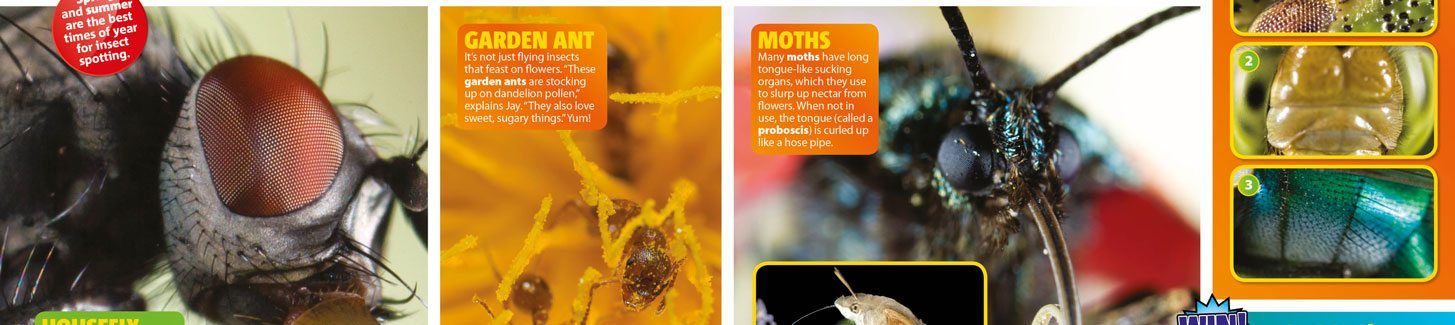
Insect safari: Science primary resource
Discover different species of insects found in the UK
This primary resource introduces children to different species of insects in the UK. Discover the magnificent mini-beasts that live in their gardens or on the school field. Which species of moth looks like a hummingbird? Why are green shield bugs nicknamed ‘stink bugs’? How do houseflies use their spit to help them eat?
Pupils will learn all about bugs from photographer and bug expert Jay Dykes in our National Geographic Kids’ Insects primary resource sheet.
The teaching resource can be used in study group tasks for investigating insects in their local area, as a printed handout for each pupil to use for a case study about their chosen species of insect, or for display on the interactive whiteboard for class discussion.
Activity: Ask children to use their individual print-outs to make flash cards about each species of insect. Pupils could be divided into groups and assigned two or three flash cards each. As a class exercise, challenge pupils to answer questions by identifying themselves from their groups if they have the correct flash card (i.e. Which insect has a long plant-juice-sucking snout? Can the insects that go through five different stages please stand up? Raise your hand if you think your insect eats aphids, etc.). Pupils could also use their flash cards to help them identify different insects on a mini-beast trail in the school field and keep a tally chart of all the insects they find.
N.B. The following information for mapping the resource documents to the school curriculum is specifically tailored to the English National Curriculum and Scottish Curriculum for Excellence. We are currently working to bring specifically tailored curriculum resource links for our other territories; including South Africa, Australia and New Zealand. If you have any queries about our upcoming curriculum resource links, please email: schools@ngkids.co.uk
This Science primary resource assists with teaching the following Lower Key Stage 2 Science (Year 3) objectives from the National Curriculum:
Pupils should be taught to:
- identify and describe the functions of different parts of flowering plants: roots, stem/trunk, leaves and flowers
- explore the requirements of plants for life and growth (air, light, water, nutrients from soil, and room to grow) and how they vary from plant to plant
- investigate the way in which water is transported within plants
- explore the part that flowers play in the life cycle of flowering plants, including pollination, seed formation and seed dispersal.
This Science primary resource assists with teaching the following Sciences Third level objectives from the Scottish Curriculum for Excellence:
- I can sample and identify living things from different habitats to compare their biodiversity and can suggest reasons for their distribution
- I have collaborated on investigations into the process of photosynthesis and I can demonstrate my understanding of why plants are vital to sustaining life on Earth
Download primary resource
Note: This is a subscriber-only benefit. If you have an active subscription, please log into your online account to download the files.

More Like




LEAVE A COMMENT
THANK YOU
Your comment will be checked and approved shortly.
WELL DONE,
YOUR COMMENT
HAS BEEN ADDED!
COMMENTS
CUSTOMIZE YOUR AVATAR