







10 brilliant Bayeux Tapestry facts
Explore this epic embroidered artwork from the Middle Ages…
The Bayeux Tapestry tells the story of the Norman invasion of 1066 – one of the biggest events in English history! But who made it, and how? And why is it so famous? Let’s find out!
Bayeux Tapestry facts
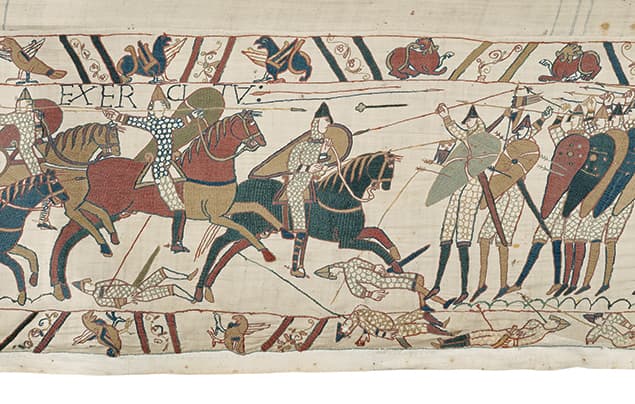
1. The tapestry is like an 11th-century comic strip…
The Bayeux Tapestry shows 58 scenes in chronological order. These tell the story of the Norman Conquest, when William, Duke of Normandy, invaded England. The story begins in 1064 or 1065, and the tapestry shows the most important moments of the invasion.
The surviving tapestry ends after the Battle of Hastings in 1066. This is when William defeated England’s last Anglo-Saxon king, Harold Godwinson. Click here to learn about the Anglo-Saxons.
But the Battle of Hastings wasn’t the end of the story. The Normans continued to conquer England, and William was crowned King on Christmas Day, 1066. This was a critical moment in England’s history. After the Norman invasion, the country was never conquered again!
2. It’s very important to historians today
The Bayeux Tapestry shows researchers what people wore, what weapons they used, and what their ships and buildings looked like at this time. Most records from the Middle Ages were only written down – but this artwork shows a clearer picture of life back then.
3. The tapestry is almost 70 metres long
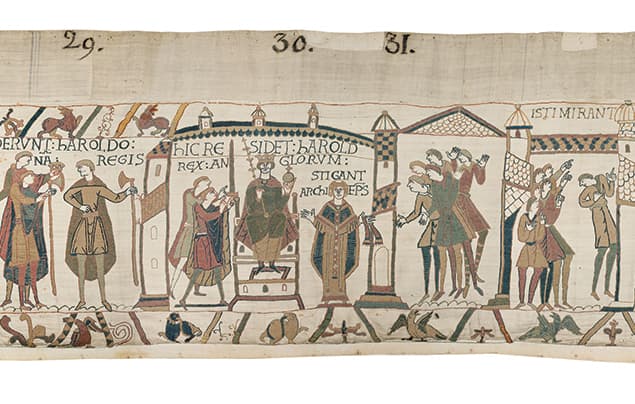
At 68.3m long, it’s bigger than the wingspan of most aeroplanes, and about two thirds as long as a football pitch! But it’s only about 50cm tall – a little smaller than the height of two Nat Geo Kids magazines stacked on top of each other.
4. It’s not technically a tapestry…
It’s actually a long strip of linen decorated with colourful embroidery stitched onto the fabric using a needle. That’s different from a tapestry, which is artwork that’s woven into fabric. Over 45kg of dyed wool was used to make it!
5. It’s packed with people and animals!
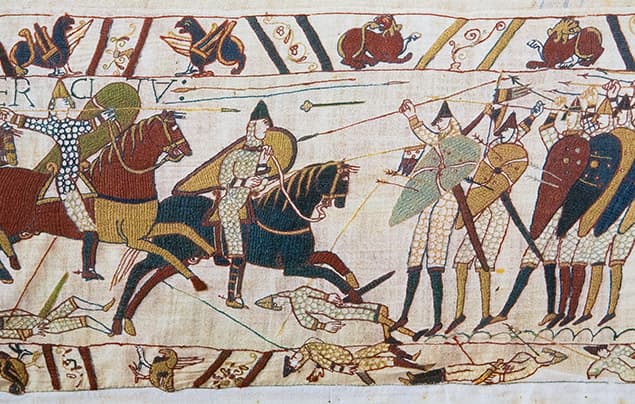
Look closely and you’ll spot hundreds of people, animals and even mythical creatures! There are 627 people, 190 horses and 35 dogs, plus more than 500 other animals, including peacocks, camels, pigs, frogs and dragons.
6. Historians aren’t quite sure who made the tapestry or where it was created…
But their best guess is that it was made in England (probably in the city of Canterbury) by skilled English embroiderers in the 1070s. First, someone drew the designs onto the linen. Then embroiderers stitched over the outlines by hand.
You can explore the tapestry online on the Musée de la Tapisserie de Bayeux website.
7. The end of the story is missing!
Many historians think the tapestry originally continued for several more metres. It may have ended with William’s coronation as King of England – but the last pieces have never been found.
8. It features a real-life comet that people believed was a prophecy…
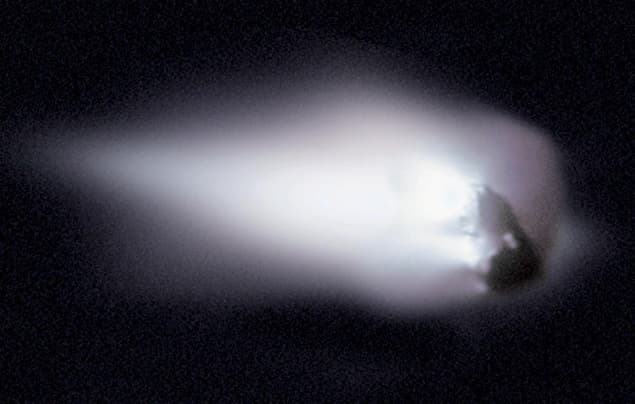
The Bayeux Tapestry shows Halley’s Comet, which has been seen from Earth for at least 2,000 years. The comet is visible once every 76 years – including in 1066 and, most recently, in 1986.
The comet appears soon after Harold is crowned King of England in January 1066. People in the Middle Ages thought it was a warning that something important – or terrible – was about to happen.
9. The tapestry still harbours many mysteries, even today…
One example is a famous scene showing a woman called Ælfgyva (say “ELF-gee-vah“) standing beside a priest. Her name is embroidered on the tapestry – but nobody knows exactly what is happening. Historians are still trying to solve the mystery today!
10. In 2026, the Bayeux Tapestry returned to England for the first time in over 900 years
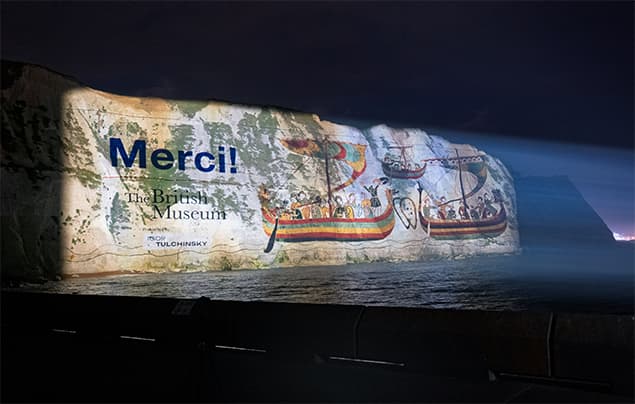
Soon after it was made, the Bayeux Tapestry travelled to Normandy, which is now part of France. But if historians are right, and the tapestry was originally made in England, then its trip to the UK in July 2026 marked a historic return to home soil!
It travelled overnight with a police escort and is now on display at the British Museum in London – giving people an amazing chance to see this epic piece of history.
What did you think of these Bayeux Tapestry facts? Let us know in the comments below!
Images: Tapestry, comic strip, header and featured © La Fabrique de patrimoines en Normandie / Antoine Cazin; Halley’s Comet © NASA / ESA / Giotto Project; Arriving in England © The Trustees of the British Museum. All others © Adobe Stock.
 Likes
Likes
More Like General History





LEAVE A COMMENT
THANK YOU
Your comment will be checked and approved shortly.
WELL DONE,
YOUR COMMENT
HAS BEEN ADDED!
COMMENTS
Haha
Apparently some of the Bayeux Tapestry is damaged from when it came to England!!
lauraperera182
Estuve en el Museo de Bayeux hace 12 años, pero conocia poco de su historia. Ahora que me he documentado, me gustaría volver a verlo, pues lo disfrutaría mas. Es una obra única, excepcional.
Bo.porsbring
Very well written, of Great historical interest
Amazed
It's a embriodary:)
Susbaka
Good facts
Bob 2
Cool cool
Wow
Gary
This was cooool
Sophie little
So greatttt loved it
Nice
R
Thanks for the info
Bob
Cool
Wow
Kewlguy
Wow
Leya
Good Information
Norah
Thumbs up 100%
DEAN
it was very cool
Rebeca
It was very itresting
CUSTOMIZE YOUR AVATAR