






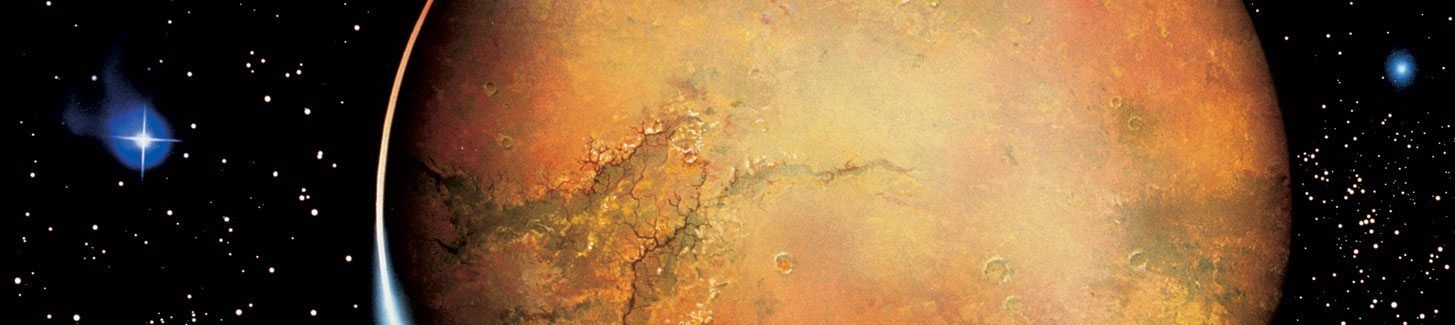
Mars facts primary resource
Be amazed by the wonders of the red planet…
This primary resource introduces children to the planet Mars. Discover nine fascinating facts about the red planet. How long does it take a spaceship to travel to Mars? How many moons does Mars have? When do scientists think that astronauts will visit this amazing planet?
In our National Geographic Kids Space primary resource, pupils will have the opportunity to learn about Mars, and how the planet compares with Earth, by using information about its gravity, temperature, landscape, moons and more.
The teaching resource can be used in study group tasks, as a printed handout for each pupil, or for display on the interactive whiteboard.
Activity: Ask pupils to research another planet in our solar system and create a poster in the same style as our Mars facts primary resource. This could be done as a group activity, where each group is allocated a different planet to research. The posters could then be used as part of a classroom display about our solar system.
N.B. The following information for mapping the resource documents to the school curriculum is specifically tailored to the English National Curriculum and Scottish Curriculum for Excellence. We are currently working to bring specifically tailored curriculum resource links for our other territories; including South Africa, Australia and New Zealand. If you have any queries about our upcoming curriculum resource links, please email: schools@ngkids.co.uk
This Science primary resource assists with teaching the following Upper Key Stage 2 Science (Year 5) objectives from the National Curriculum:
Pupils should be taught to:
- describe the movement of the Earth, and other planets, relative to the Sun in the solar system
Pupils should learn that the Sun is a star at the centre of our solar system and that it has eight planets: Mercury, Venus, Earth, Mars, Jupiter, Saturn, Uranus and Neptune (Pluto was reclassified as a ‘dwarf planet’ in 2006).
This Science primary resource assists with teaching the following Sciences Second level objectives from the Scottish Curriculum for Excellence:
- By observing and researching features of our solar system, I can use simple models to communicate my understanding of size, scale, time and relative motion within it.
Scottish Curriculum for Excellence Sciences Third level objectives:
- By using my knowledge of our solar system and the basic needs of living things, I can produce a reasoned argument on the likelihood of life existing elsewhere in the universe.
Download primary resource
Note: This is a subscriber-only benefit. If you have an active subscription, please log into your online account to download the files.











LEAVE A COMMENT
THANK YOU
Your comment will be checked and approved shortly.
WELL DONE,
YOUR COMMENT
HAS BEEN ADDED!
COMMENTS1
lizzy
CUSTOMIZE YOUR AVATAR