




Heroes of the Windrush Generation
Celebrate the brave folks who left the Caribbean to help rebuild Britain…
Discover how a group of people sailed from the Caribbean to Britain to help bring the country back from the brink – and how their impact changed British culture forever. Let’s meet the Windrush Generation…
What is the Windrush Generation?
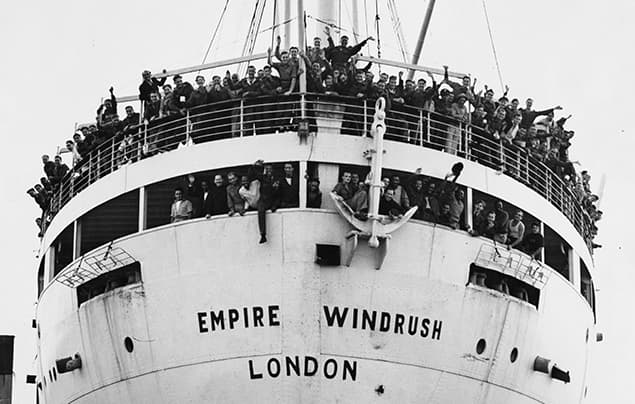
The Windrush Generation is the name given to Caribbean settlers who arrived in Britain from 1948 to 1971. It began when 1,027 passengers arrived in Tilbury, Essex, on 22 June 1948, aboard a ship called HMT Empire Windrush. Many were answering a plea for help from the British government, asking them to come and help rebuild the country following World War 2.
The people who sailed to Britain were from countries in the Caribbean that were under British rule. Excited by stories they’d heard about the ‘Motherland‘, the passengers arrived feeling optimistic. But, greeted with grey skies and racist treatment, life was more difficult than they’d imagined.
Despite this, the Windrush Generation stayed strong and became an important part of British society. They fought for equality, introduced Caribbean culture, and helped shape the country we know today.
Let’s meet four pioneering heroes of the Windrush Generation…
Floella Benjamin
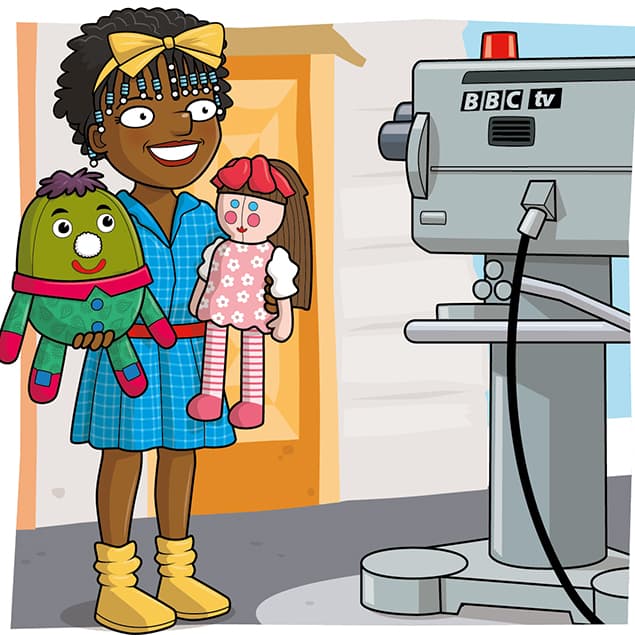
Born: 23 September 1949
Famous for: Campaigning for children’s welfare and starring on kids’ TV!
Floella arrived in Britain from Trinidad when she was just ten. After leaving school, she set her sights on becoming Britain’s first Black female bank manager. But then her life took her in a very different direction…
In 1973, Floella began performing in musicals, and in 1976 she got her big break, becoming a TV presenter on the BBC’s children’s show Play School – educating kids across the country with her warmth and charm. Ask your parents or grandparents whether they remember watching her on the telly!
Outside of showbiz, Floella has campaigned tirelessly for the welfare of children throughout the world, and for a society where everyone, regardless of their background or skin colour, is treated with respect and fairness.
This work earned her a place in the House of Lords in 2010 – a significant position in Britain’s political system – and she now has the title Baroness Benjamin of Beckenham.
Sam King
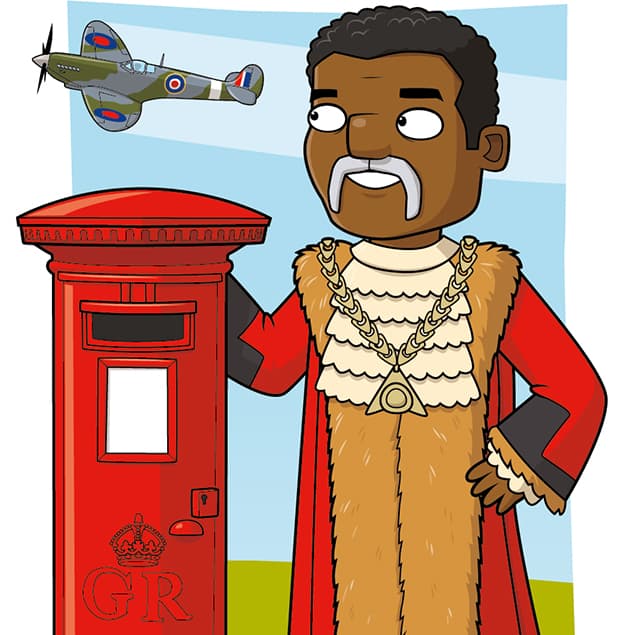
Born: 20 February 1926
Died: 17 June 2016
Famous for: Founding the Windrush Foundation charity
Born in Jamaica, Sam had his life planned out – he’d work on his family’s farm and then eventually take it over. But when World War 2 broke out, everything changed. Sam had heard stories that if Germany won they would bring back slavery – and so, aged 18, he decided to join the Royal Air Force.
After serving, Sam found it hard adjusting to life back in Jamaica, so he decided to sail to the UK and have a fresh start. Arriving on 22 June 1948, he re-joined the RAF before starting a 30-year career with the Royal Mail, rising from postman to manager.
Sam was active in the local community, too – working on newspapers and helping to organise a Caribbean festival. In 1983, Sam became the first Black Mayor of Southwark in London.
In 1995, Sam co-founded the Windrush Foundation with Arthur Torrington. This charity fights against discrimination, highlighting the stories, struggles and cultural contributions of Britain’s Caribbean community. No wonder Sam was lovingly called ‘Mr Windrush‘!
Lord Kitchener
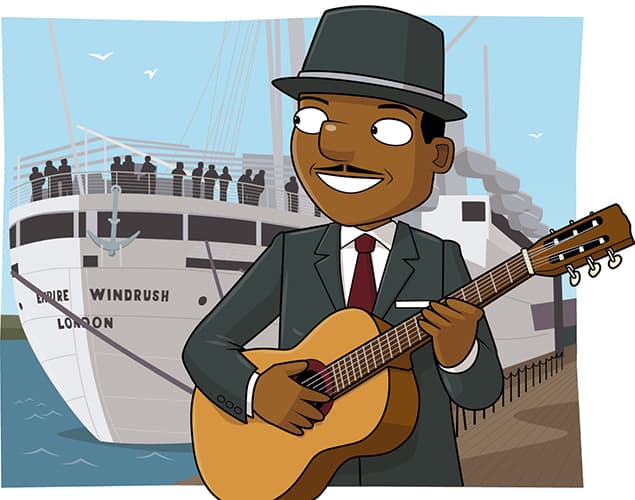
Born: 18 April 1922
Died: 11 February 2000
Famous for: Bringing Caribbean calypso music to the UK
Aldwyn Roberts – better known as Lord Kitchener – was a talented musician from Trinidad. He performed a style of Caribbean music called calypso and became very popular in his homeland. But in 1948 he decided to try his luck in England, so he boarded the HMT Empire Windrush!
Reporters were waiting when the ship docked in Tilbury, and the young Kitchener was filmed singing a brilliant song that he’d written on the four-week voyage – London is the Place for Me. Ask a grown-up to look it up on YouTube!
But Lord Kitchener’s optimism was short-lived, and his lyrics soon began describing the racism that migrants faced. Despite this unwelcoming environment, Lord Kitchener had a successful career. He performed regularly around the country and on BBC radio, and recorded at some of Britain’s top studios.
Lord Kitchener returned to Trinidad in 1963 and continued writing songs right up until his death. Though his time in the UK was brief, his music helped sow the seeds of the Caribbean influence we see in all kinds of British music to this day – from reggae and drum & bass to grime!
Doreen Lawrence
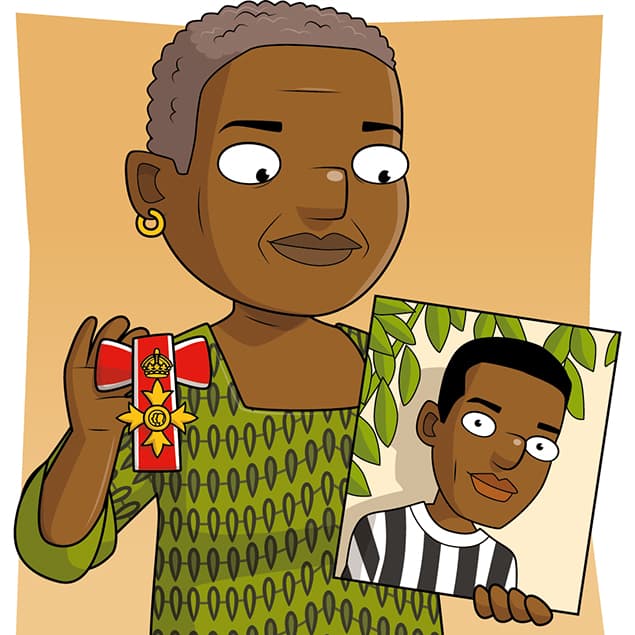
Born: 24 October 1952
Famous for: Campaigning against racism
Doreen’s story is about never giving up, even in the face of incredible sadness. Born in Jamaica, she settled in the UK when she was nine and grew up to work in a bank.
Sadly, in 1993, tragedy struck when her eldest son, Stephen, was killed in a racist attack. To make things worse, the police failed to prosecute the suspects. It would have been easy for Doreen’s sadness to swallow her up, but she was determined to fight for justice and spent years campaigning.
In 1999, a public inquiry found that the Metropolitan Police was “institutionally racist” and that this was one of the main reasons they’d failed to solve the case – just as Doreen had believed. Stephen’s killers were eventually jailed in 2012.
Brave Doreen could have stopped there, but she continued to fight for change in the police force, and for justice for the victims of other racist crimes. She also created the Stephen Lawrence Charitable Trust to give young people the opportunities to achieve their dreams.
In 2003, Doreen was awarded an OBE for her work, and in 2013 she was made a member of the House of Lords, too. What an inspiration!
What do you think of these heroes of the Windrush Generation? Tell us in the comments.
Illustrations © Marek Jagucki. Images © Getty Images UK.
 Likes
Likes
More Like General History






LEAVE A COMMENT
THANK YOU
Your comment will be checked and approved shortly.
WELL DONE,
YOUR COMMENT
HAS BEEN ADDED!
COMMENTS
Oscar
Heroes wahoo!
y6 Aahil
learned allot about the Windrush generation!!!
Harry
WOW!!!!!1952 IS A LOOOOOOOOONG TIME AGO!!!!!!!
KP
This piece of information was really helpful for my learning and helped me lots!
It is good
Baddie
This slayed. Period.
Nice,very interesting
Freya
It is so sad that they still don’t all get recognised. I think they are inspiring.
wilpat
great news about the windrush generation
kaira
pls can u put mona baptise
This is crazy cool
Definitely not a ro not
675675
very gooddddddd stuffff
2323
great facts
Eliza
I think it’s a great idea
Michela
SAVE THE WORLD FOR THE PEOPLE
emily
i did one of these facts in my work thanks very intresting
miles
real cool I did not know that like what the 67
H
Very interesting
Guy
Wow
very interesting
Cool facts I didn’t know
Hi
Good
oleksii
very intresing i very like too
CUSTOMIZE YOUR AVATAR