






Chocolate art primary resource
Discover how chocolate can be used in art and learn more about different landmarks from around the world
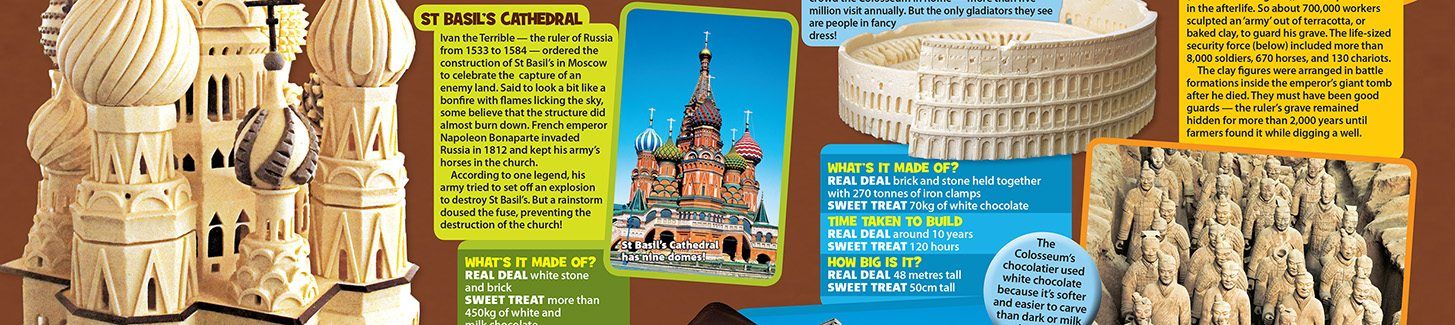
This primary resource gives children the chance to learn more about different landmarks from around the world, and to think about different and unusual mediums to sculpt in. Discover how chocolate can be used in art. What are the real Terracotta Warriors made from? Why did the Colosseum’s chocolatier decide to use white chocolate? How much chocolate was used to make the St Basil’s Cathedral sculpture?
Pupils will learn about three historic hotspots from around the world, and how they became the inspiration for some impressive chocolate art in our National Geographic Kids’ Art and Culture primary resource sheet.
The teaching resource can be used in study group tasks for discussion about unusual art materials, food, and impressive architecture. It could be used as a printed handout for each pupil to review and annotate, or for display on the interactive whiteboard for class discussion.
Activity: Ask children to research other unusual sculptures made from chocolate, and create a collage of their findings. Pupils could research landmarks they would like to see carved or crafted and create a design plan of what they think they could be made out of, how tall or wide they would be, how long they would take to make, etc. They could practise making sculptures from clay or plasticine.
N.B. The following information for mapping the resource documents to the school curriculum is specifically tailored to the English National Curriculum and Scottish Curriculum for Excellence. We are currently working to bring specifically tailored curriculum resource links for our other territories; including South Africa, Australia and New Zealand. If you have any queries about our upcoming curriculum resource links, please email: schools@ngkids.co.uk
This Art and Culture primary resource assists with teaching the following EYFS objectives from the National Curriculum:
- Shape, space and measures: children use everyday language to talk about size, weight, capacity, position, distance, time and money to compare quantities and objects and to solve problems.
- In planning and guiding children’s activities, practitioners must reflect on the different ways that children learn and reflect these in their practice. Three characteristics of effective teaching and learning are: playing and exploring— children investigate and experience things, and ‘have a go’
National Curriculum Key Stage 1 Art objective:
Pupils should be taught:
- to use a range of materials creatively to design and make products
- to use drawing, painting and sculpture to develop and share their ideas, experiences and imagination
- to develop a wide range of art and design techniques in using colour, pattern, texture, line, shape, form and space
National Curriculum Key Stage 2 Art objective:
Pupils should be taught:
- to improve their mastery of art and design techniques, including drawing, painting and sculpture with a range of materials [for example, pencil, charcoal, paint, clay]
This Art primary resource assists with teaching the following Expressive arts Early level objectives from the Scottish Curriculum for Excellence:
- I have the freedom to discover and choose ways to create images and objects using a variety of materials.
Scottish Curriculum for Excellence First level Expressive arts objectives:
- I have the opportunity to choose and explore an extended range of media and technologies to create images and objects, comparing and combining them for specific tasks.
Download primary resource
Note: This is a subscriber-only benefit. If you have an active subscription, please log into your online account to download the files.





LEAVE A COMMENT
THANK YOU
Your comment will be checked and approved shortly.
WELL DONE,
YOUR COMMENT
HAS BEEN ADDED!
COMMENTS
Iona
I love this magazine!!
CUSTOMIZE YOUR AVATAR