






Night at the Museum: Primary resource
Learn all about the real life historical characters that influenced the film
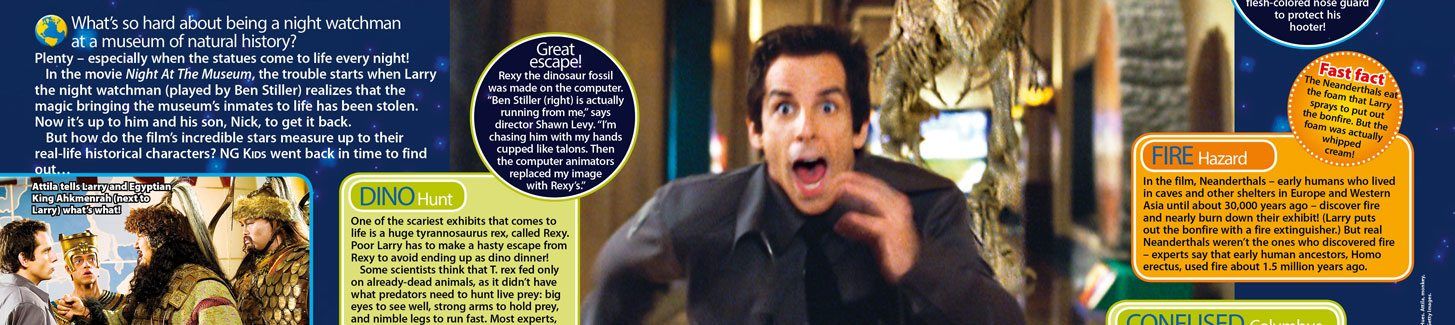
This primary resource discusses the popular film Night at the Museum. Discover how the characters in the film measure up to their real life historical counterparts. Did the real Attila the Hun have a soft side? Which early humans actually discovered fire? Was the real Christopher Columbus lost?
Pupils will learn about how the film makers used real life historical characters to influence the plot of the film and create interesting narratives in our National Geographic Kids’ Culture primary resource sheet.
The teaching resource can be used in study group tasks for exploring the ways that real life can influence films; as a printed handout for each pupil to work with individually, or for display on the interactive whiteboard to be read and discussed as a whole class activity.
Activity: As a whole class, ask pupils whether they have seen the film Night at the Museum, or either of its sequels. Watch a clip of the film to help with discussion and review the characters mentioned in the primary resource sheet. Ask pupils to research more about these historical characters and write comparative profiles, comparing the real person and the way they are portrayed in the film. They could present their comparisons in a table. Why might the film makers have changed some of the details of these historical figures? Discuss in groups, or as a class. Pupils could also storyboard their own short scene to add to the film, introducing another historical character of their choosing. Will they keep their characteristics true to life, or adjust them for narrative purposes?
N.B. The following information for mapping the resource documents to the school curriculum is specifically tailored to the English National Curriculum and Scottish Curriculum for Excellence. We are currently working to bring specifically tailored curriculum resource links for our other territories; including South Africa, Australia and New Zealand. If you have any queries about our upcoming curriculum resource links, please email: schools@ngkids.co.uk
This Culture primary resource assists with teaching the following History objectives from the National Curriculum:
- Gain historical perspective by placing their growing knowledge into different contexts, understanding the connections between local, regional, national and international history; between cultural, economic, military, political, religious and social history; and between short- and long-term timescales.
And with teaching the following English objectives from the National Curriculum:
- Comprehension skills develop through pupils’ experience of high-quality discussion with the teacher
National Curriculum Key Stage 1 History objective:
- Pupils should be taught: the lives of significant individuals in the past who have contributed to national and international achievements
This Culture primary resource assists with teaching the following Literacy and English First level objectives from the Scottish Curriculum for Excellence:
- Using what I know about the features of different types of texts, I can find, select, sort and use information for a specific purpose
And with teaching the following Social Studies Second level objective from the Scottish Curriculum for Excellence:
- I can discuss why people and events from a particular time in the past were important, placing them within a historical sequence
- I can compare and contrast a society in the past with my own and contribute to a discussion of the similarities and differences
Scottish Curriculum for Excellence Second level Literacy and English objectives:
- Using what I know about the features of different types of texts, I can find, select and sort information from a variety of sources and use this for different purposes.
- I can make notes, organise them under suitable headings and use them to understand information, develop my thinking, explore problems and create new texts, using my own words as appropriate.
Scottish Curriculum for Excellence Third & Fourth level Literacy and English objectives:
- Using what I know about the features of different types of texts, I can find, select, sort, summarise, link and use information from different sources.
- I can make notes and organise them to develop my thinking, help retain and recall information, explore issues and create new texts, using my own words as appropriate.
Download primary resource
Note: This is a subscriber-only benefit. If you have an active subscription, please log into your online account to download the files.

More Like










LEAVE A COMMENT
THANK YOU
Your comment will be checked and approved shortly.
WELL DONE,
YOUR COMMENT
HAS BEEN ADDED!
COMMENTS1
CUSTOMIZE YOUR AVATAR